- eco-nnect
- Posts
- Is it a forest or a plantation? 🤔
Is it a forest or a plantation? 🤔

Gaia Solaris
September 27, 2024
Dear forest-makers,
Wildfires in Europe are getting fiercer, yet in Europe land isn’t being cleared for cattle (like in South America) So what’s going on? Apparently, for decades we’ve been replacing native and diverse forests with monoculture plantations. Forests are resilient ecosystems with a natural firewall system. So when endemic trees are torn down and replaced with foreign “resource” trees, our land is now more vulnerable than ever. Read the story below to find out more…
🗞️ In Climate News
🇵🇹 ICYMI: Portugal declared a state of calamity as wildfires raged out of control
🇮🇩 Java activists risk jail for exposing shrimp farm pollution crisis
🇨🇬 NGOs raise concerns over oil exploration in Republic of Congo national park
🇺🇸 Nearly five months in, Oregon wildfire season expected to last into mid-October
🇯🇵 Heavy rain triggers landslides and floods in central Japan
🇦🇱 Activists board coal train as Albanese government approves three coalmine expansions
🇲🇽 Two die in mudslide as Hurricane John makes landfall in Mexico
📈 Cool Trends
♾️ eco-story
Back in 2020 I read an amazing book that I have constantly reflected upon: Wilding, by Isabella Tree. It was covid lockdown, and I was lucky enough to be spending it in the Swiss mountains. Every morning, rain or shine, I would do a hike through what I thought was a corner of Switzerland’s pristine forest. After reading Wilding, it hit me. I wasn’t hiking through forests, I was walking in a pine plantation. Let me explain to you why.
In the West the difference between a forest and a plantation isn’t taught in school. The fact that the UK was home to a temperate rainforest, has been conveniently forgotten, replaced by the idea of the English countryside being “beautiful” rolling moores. In Germany and Switzerland every tree is numbered by the government. Most rivers in Europe are channeled, the fact that salmon used to migrate up them to most sounds like a long-lost fantasy. European bison used to criss-cross the plains of Belgium and Germany, while beavers naturally dammed the rivers. Deforestation in Europe happened so long ago, that culturally we don’t even know what our primary forests looked like, which animals roamed and what plant medicines our ancestors foraged.
What I find even more troublesome, is what we interpret as “nature.” We can easily recognise agricultural land, but many still confuse a plantation for a forest. Right now, as wildfires ravage central and northern Portugal, experts are finally pointing the finger to Portugal’s paper and timber industries that dominate the area with eucalyptus and pine plantations. Did you know that eucalyptus is now the primary tree species in Portugal, despite being native to Australia?
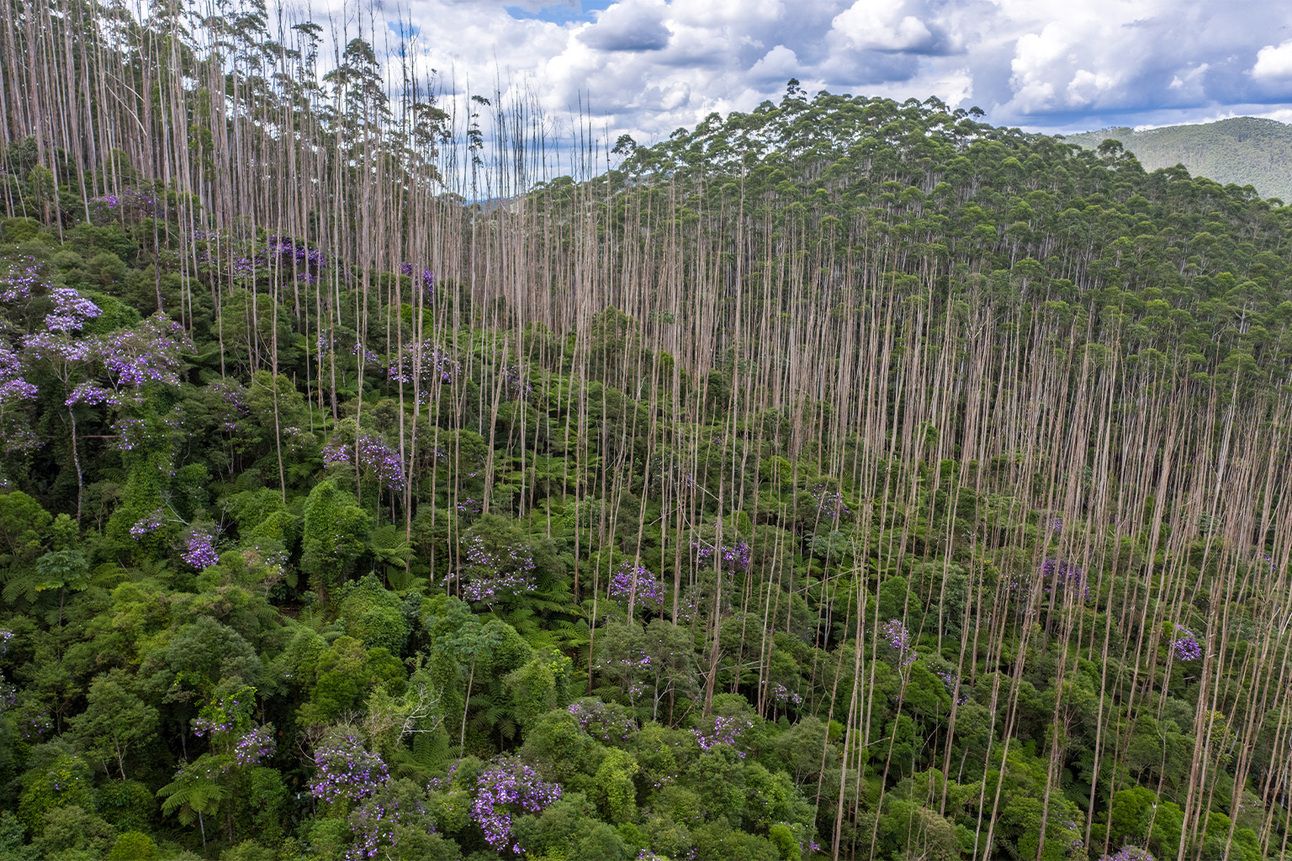
A landscape containing native forest in the process of natural regeneration in the understory of a eucalyptus plantation in Parque das Neblinas in Brazil’s, Image courtesy of Paulo Guilherme Molin/Federal University of São Carlos.
“Eucalyptus covers 845,000 hectares in the Iberian countryside, or 26 percent of forests. Technically these are cultivations that feed the paper and cellulose sectors, with eucalyptus grown exclusively for pulp, which is used to make various paper products.”
🌏 The Culture Column
📺 What we’re watching:
📸 Profile of the week: @quercus_ancn_
📖 What we’re reading: In defining plantations as forest, FAO attracts criticism
🤯 Shocking fact we learnt this week: Portuguese forests have one of the highest percentages of private lands in Europe (around 85%)
Daily News for Curious Minds
Be the smartest person in the room by reading 1440! Dive into 1440, where 4 million Americans find their daily, fact-based news fix. We navigate through 100+ sources to deliver a comprehensive roundup from every corner of the internet – politics, global events, business, and culture, all in a quick, 5-minute newsletter. It's completely free and devoid of bias or political influence, ensuring you get the facts straight. Subscribe to 1440 today.