- eco-nnect
- Posts
- On conserving sharks, reappearing otters and natural pools
On conserving sharks, reappearing otters and natural pools
While Australian Indigenous elders lost a battle against the government

Gaia Solaris
July 15, 2025
Dear shark lovers,
Yesterday was Shark Awareness Day, a date that rarely trends, yet honors one of the ocean’s most misunderstood and ecologically vital creatures. It passed quietly for many, overshadowed perhaps by flashier headlines or distant shores, but for those of us who live with salt in our blood and reef dreams in our heads, it’s a moment to reflect on what sharks truly mean to the balance of our oceans, and how mistreated and misunderstood they’ve been for decades.
Too often vilified as mindless predators, sharks are in fact guardians of marine health, maintaining balance, diversity, and resilience in ecosystems pushed to their limits by human exploitation. And yet, their populations continue to plummet due to illegal fishing, bycatch, habitat degradation, and the insatiable demand for fins and shark liver oil. If sharks disappear, the entire web of ocean life begins to unravel.
That’s why this week’s eco-story is dedicated to shark conservation and one of the people behind a pioneering initiative to rewild endangered shark species in Indonesia and beyond. This isn’t about fear, it’s about reverence. It’s about understanding that without sharks, there is no oceanic future.
Let Shark Awareness Day be more than a hashtag. Let it be a call to awaken, to protect the protectors.
With salt,
🗞️ In Climate News
🇬🇧 Drought declared in English Midlands after hot, dry weather takes its toll
The Environment Agency announcement follows England's driest start to the year since 1976, leaving many rivers across the Midlands at extremely low levels.
Declaring a drought is a public sign that water companies might introduce restrictions on water use if they aren't already in place. That can involve hosepipe bans, which have already started for millions of people in Yorkshire.
🇦🇺 Indigenous elders lose landmark climate battle against Australian government
In 2021, community elders Pabai Pabai and Paul Kabai launched legal action against the then-Liberal government for breaching its duty of care to protect the Torres Strait Islands from the impacts of climate change.
🌪️ The next ‘Storm of the Century’ could be even stronger, new study shows
Michael Mann, a climate scientist at the University of Pennsylvania and an author of the study, was trapped in a Philadelphia hotel room for three days during Snowmageddon. It was this experience that first sparked his curiosity about how these storms might be affected by global warming.
🇺🇸 The Trump admin just hired 3 outspoken climate contrarians. Scientists are worried what comes next
Each were given positions in the Energy Department, which is led by Secretary Chris Wright, a former oil and gas fracking executive.
The researchers are John Christy and Roy Spencer, both of whom are research scientists at the University of Alabama at Huntsville, and Steven E. Koonin of Stanford University’s Hoover Institution.
🇹🇼 Typhoon Danas lashes southern Taiwan with record winds, injuring hundreds
Over 700 trees were felled across western cities and towns and road signs were ripped off and strewn across the streets, government data showed.
More than 650 electric poles and three major electric towers were knocked down across the island, in what Taiwan Power Company described as damage "unseen for decades" to its power grid.
🇱🇧 Lebanon's worst drought on record drains largest reservoir
Water levels at Lebanon's largest reservoir on the Litani River have fallen to historic lows amid what experts describe as the country's worst drought on record, threatening agriculture, electricity production, and domestic water supplies.
The Litani River National Authority said inflows to Lake Qaraoun during this year's wet season did not exceed 45 million cubic metres, a fraction of the 350 million cubic metres annual average.
🇨🇳 China tells EU new climate target coming in autumn
China and the EU each missed a February deadline to submit new national climate change targets to the United Nations, which set out how much a country will cut its greenhouse gas emissions by 2035 - and will be used to assess global progress towards averting disastrous levels of warming.
🇧🇷 Brazil’s Arariboia set to be the first Indigenous land with legal cattle
A crackdown on illegal cattle herds inside the Arariboia Indigenous Territory in Brazil has hit unexpected pushback that could make this the first area of its kind in the country to allow licensed cattle ranching.
That raised concerns among Indigenous rights activists about outsiders once again bringing their illegal herds back into this protected territory, and the environmental damages that would entail.
🇲🇾 ‘Hopeful sign’ as Eurasian otter reappears in Malaysia after a decade
The last confirmed Eurasian otter (Lutra lutra) sighting by scientists in Malaysia was in 2014, near Danum Valley Field Centre, a conservation area also in Sabah.
📈 Cool Trends
♾️ eco-story
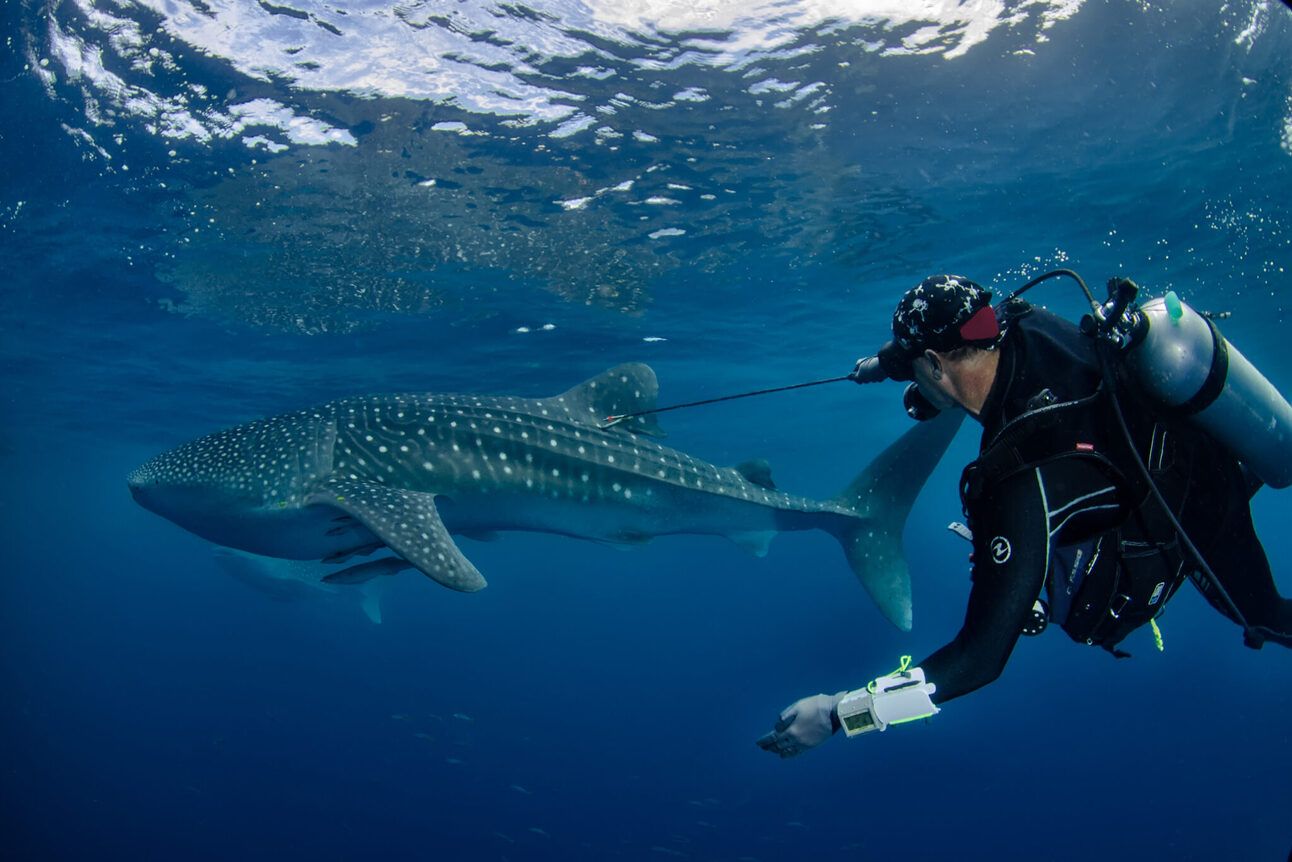
For more than three decades, Mark Erdmann has worked where many only dream of diving—on the reefs and in the tangled mangroves of Indonesia’s farthest reaches. A marine biologist by training and a conservationist by necessity, Erdmann has spent much of his life documenting new species, persuading local communities to back marine protection, and fighting off the encroachment of extractive industries. His career, by his own account, has spanned more than 220 species discoveries, a handful of close encounters with crocodiles, and the creation of a new model for shark rewilding.
Erdmann’s journey began in a remote island village off the coast of South Sulawesi in 1991, where he arrived as a Ph.D. student studying coral reef ecology. His neighbors, he quickly realized, were bomb fishers and shark finners. The shift from science to action was swift.
“It was clear that more than science was needed; active protection was critical,” he recalls.
That realization became a life’s work. As Vice President of Asia-Pacific Marine Programs at Conservation International and now Executive Director of ReShark and Shark Conservation Director at Re:wild, Erdmann has been at the forefront of efforts to transform marine protection from a top-down regulatory exercise to a bottom-up, community-owned endeavor. Few places showcase this as clearly as Raja Ampat, the archipelago off West Papua that has become the crown jewel of Indonesian marine conservation.
🌏 The Culture Column
📺 What we’re watching: Extinction: The Facts
📸 Profile of the week: @resharkorg
📖 What we’re reading: Emperors of the Deep: Sharks—The Ocean's Most Mysterious, Most Misunderstood, and Most Important Guardians, by William McKeever
🤯 Shocking fact we learnt this week: Sharks have existed for over 400 million years, making them older than the first trees on Earth.