- eco-nnect
- Posts
- on earthquakes, corals and deep-sea mining
on earthquakes, corals and deep-sea mining
while sandbags are being uses to build houses

Gaia Solaris
April 28, 2025
Dear analogic humans,
It’s 19:00 and I’ve just got electricity back.
An unprecedented power outage has just affected the entire Iberian Peninsula, along with other regions in southern Europe. Everything collapsed. I was stuck in a train, inside a tunnel, along with hundreds of people, in complete darkness for hours until the rescue team arrived. We were crossing a mountain and had no means of communication. Our phones were not working.
There was nothing we could do.
Most people couldn’t even buy water when we arrived to a small shop, because paying by card needs electricity, just like pretty much anything else we wanted to do.
And it only made me think about how extremely reliant on electricity we have become. How this wouldn’t have been a problem if I weren’t in a big city. Those in the countryside probably didn’t even notice until hours later, while they were outside in nature, working in a field or simply enjoying a walk in the forest.
I noticed, more than ever before, how lost I am in this urban ecosystem without a phone. Traffic lights weren’t working, and chaos took over the streets. People don't even walk anymore.
If only I were living within nature, none of these inconveniences would have happened. I wouldn’t have had electricity for a few hours, but my life would have stayed the same.
Right now, I can only think about how much I want to change this strange, robotic reality, while people walk up 12 floors to small apartments in buildings where the elevators still aren’t working.
🗞️ In Climate News
🇺🇸 Trump moves to begin deep-sea mining despite environmental and legal concerns
President Donald Trump signed an executive order on April 24 to expedite the process of exploring and mining for minerals on the deep ocean seafloor, in both US and international waters.
🐬 Whales and dolphins at risk as report reveals ecological decline in Gulf of California
The recent “Assessment of the Ecological Health of the Gulf of California” report shows a decline in several populations of animals throughout the narrow sea flanked by the Mexican mainland and Baja California.
🇧🇷 Indigenous delegates at the UN raise alarm for isolated peoples in the Amazon
Deforestation is closing in on some communities in the Amazon and many lack official recognition of records of their existence, say representatives at the 10-day gathering in the U.N. headquarters in New York City.
🇹🇷 Powerful earthquake shakes Istanbul
More than 150 people were injured when they jumped from buildings in Istanbul on Wednesday as one of the strongest quakes in years hit the city.
🇪🇨 Magnitude 6.3 earthquake strikes Ecuador, 20 injured
The government said in a report that 20 people were injured and around 135 families were affected by the earthquake. Several public buildings and private homes were damaged, and some areas also experienced power outages.
🇬🇧 Area burned by UK wildfires in 2025 already at annual record
More than 29,200 hectares (292 sq km or 113 sq miles) has been burnt so far, according to figures from the Global Wildfire Information System, which has recorded burnt area since 2012.
🇹🇻 Pacific island states urge rich countries to expedite plans to cut emissions
All governments are supposed to publish new plans this year on cutting greenhouse gas emissions, but so far only a small majority have done so, and some of the plans submitted have been inadequate to the scale of action needed.
🪸 84% of the world’s reefs hit by bleaching after worst global event on record
Reefs in at least 82 countries and territories have been exposed to enough heat to turn corals white since the global event started in January 2023, the latest data from the US government’s Coral Reef Watch shows.
🌍 Severe drought in Africa persists and is expected to worsen
Large regions in northern, southern, and central-western Africa, as well as northern Madagascar, are experiencing severe drought conditions due to two or more years of lower-than-average rainfall and higher than usual temperatures. These are the findings of a new report from the Copernicus Global Drought Observatory.
📈 Cool Trends
♾️ eco-story
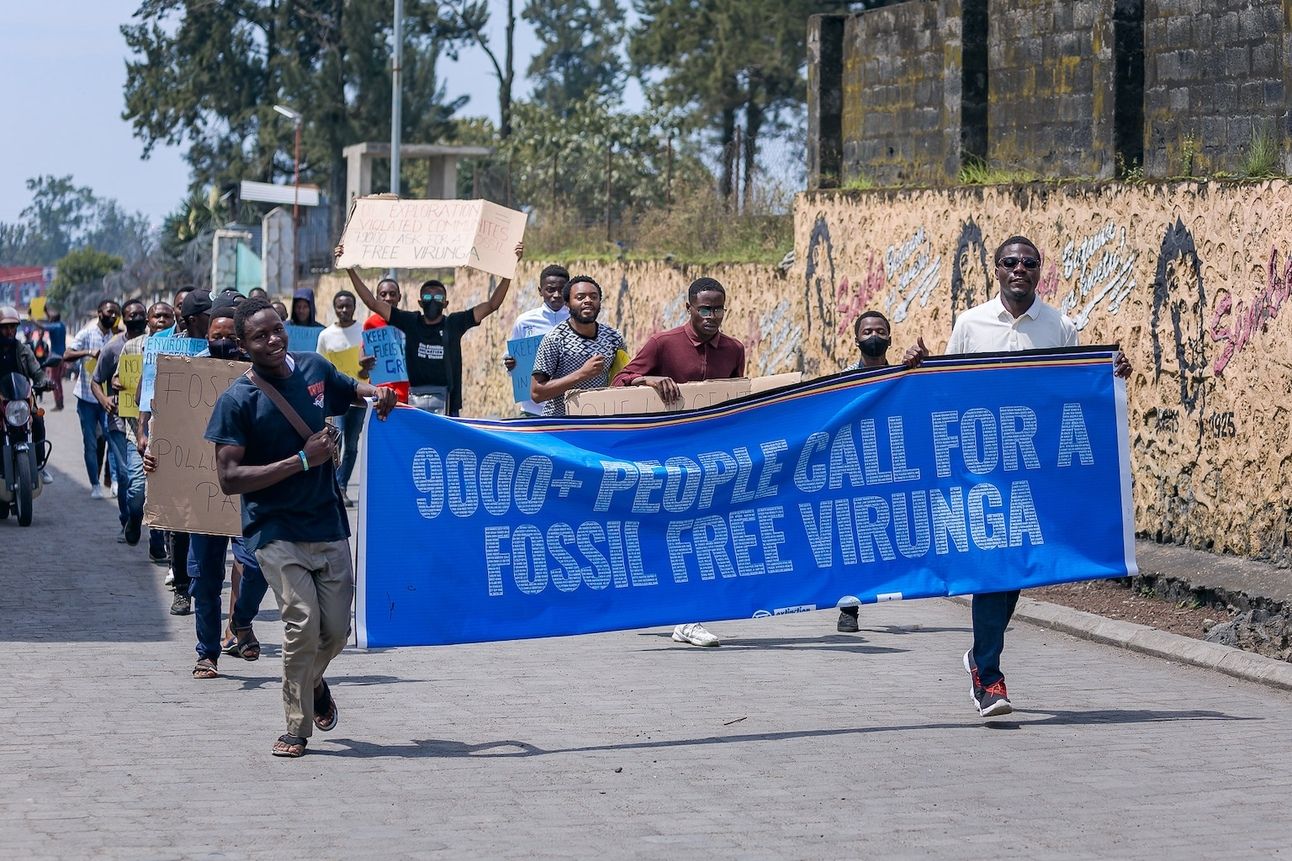
“For me, the 100th anniversary of Virunga National Park is the fruit of resistance. A peaceful resistance led by local activists [and] environmentalists,” says François Kamaté, environmental activist and founder of the local branch of Extinction Rebellion located in Rutshuru, on the edges of the park in Central Africa.
Originally called Parc National Albert, Virunga National Park (PNVi in French) was created on April 21, 1925, in what is now the Democratic Republic of Congo (DRC) by the royal decree from Belgium, its then-colonizing nation. Virunga was the first national park in Africa. It was initially created to protect wildlife and the environment from human encroachment.
“The idea, at the time, was to keep nature under wraps and avoid any form of human intervention. In other words, no fire, no logging, no intervention on animals, we let nature evolve,” says Jean-Pierre d’Huart, former scientific curator of the Virunga Park and co-editor of a book dedicated to the park’s centenary.
More than just a place for research, the park became — during times of peace — a major tourist attraction in the region, especially due to its population of mountain gorillas (Gorilla beringei beringei). Located in the Albertine Rift, on the border with Rwanda and Uganda, Virunga has been a UNESCO World Heritage Site since 1979. Covering an area of 790,000 hectares (1.95 million acres), the park is renowned for its rich fauna: In addition to mountain gorillas, it is home to endangered wildlife like chimpanzees (Pan troglodytes) and the extremely rare okapi (Okapia johnstoni). It is also home to Africa’s largest hippopotamus (Hippopotamus amphibius) population. Virunga’s mountain ranges include Mount Nyiragongo and Mount Nyamuragira, the two most active volcanoes in Africa.
🌏 The Culture Column
📺 What we’re watching: Virunga
📸 Profile of the week: @virunganationalpark
📖 What we’re reading: The Healing Wisdom of Africa: Finding Life Purpose Through Nature, Ritual, and Community by Malidoma Patrice Somé
🤯 Shocking fact we learnt this week: Over 200 rangers have been killed while protecting Virunga’s wildlife and forests. It is considered the most dangerous conservation job on Earth.