- eco-nnect
- Posts
- On living with water, not against it
On living with water, not against it
While Cyprus is burning

Gaia Solaris
July 25, 2025
Dear tide watchers,
This week, the waters rose again. Not just in rivers and streets, but in headlines, in memories, and in warnings we’ve heard before. A flood isn’t just a storm’s aftermath; it’s a message. One we’ve long ignored, or tried to control with concrete and denial.
Floods have always been part of the planet’s breathing, the river’s way of reminding us that we live within cycles, not outside them. But now, in a warming world, they’re angrier, faster, and deadlier. They sweep away homes, histories, and entire ways of life, from the lowlands of Pakistan to the farms of Mozambique to the suburbs of Vermont. And still, too often, our response is to rebuild in the same place, behind the same walls, waiting for the next one.
This week’s eco-story dives into the reality of floods in the age of climate collapse and the urgent need to move not just away from rising waters, but toward a new mindset. One that listens to the river instead of trying to silence it. One that understands resilience isn’t resistance, it’s adaptation.
Let floods be more than breaking news. Let them be a turning point, away from false security, and toward living with water, not against it.
With water,
🗞️ In Climate News
🇺🇳 In landmark opinion, the World Court says climate change is an 'existential threat'
he United Nations' highest court on Wednesday underlined "the urgent and existential threat posed by climate change" as it started to read out an opinion on the legal obligations of states to take action.
The non-binding opinion by the International Court of Justice, also known as the World Court, is likely to determine the course of future climate action across the world.
🍄 Earth’s underground network of fungi needs urgent protection, say researchers
The research, published in the journal Nature on Wednesday, found that 90% of the biodiverse hotspots of mycorrhizal fungi were in unprotected ecosystems. Loss of the ecosystems could lead to reductions in carbon drawdown, crop productivity and ecosystem resilience to climate extremes.
🇬🇷 Greek fir forests dying as heat peaks and snow cover wanes
Less water and moisture mean that fir trees become more vulnerable to attacks by pests that bore into their bark to lay eggs and create tunnels, disrupting the trees' ability to transport nutrients between roots and branches and leading to their death.
🇨🇾 Two dead, homes burn in massive wildfire in Cyprus
At least 100 square kilometres (39 square miles) was razed to the ground in a wine-producing region north of the city of Limassol after the blaze broke out around midday on Wednesday, with several fronts still active on Thursday morning.
🇻🇳 Severe floods triggered by storm Wipha kill at least 3 in Vietnam's Nghe An
Heavy rains triggered by tropical storm Wipha have caused severe flooding in the central Vietnamese province of Nghe An, killing at least three people and leaving one more missing.
With a long coastline facing the South China Sea, Vietnam is prone to typhoons that often cause deadly floods and mudslides. Wipha is the first major storm to hit the country this year.
🇻🇺 The tiny Pacific nation of Vanuatu turns to the world court as climate disasters mount
“We used to know every inch of that reef,” he said. “It was like a friend.”
Now, it’s unrecognizable. After Cyclone Pam battered the reef in 2015, sediment from inland rivers smothered the coral beds. Crown-of-thorns starfish swept in and devoured the recovering polyps. Back-to-back cyclones in 2023 crushed what was left. Then, in December 2024, a 7.3 magnitude earthquake shook the seabed.
🇺🇸 Wildfire near Grand Canyon expands almost twentyfold over 24 hours
What officials have dubbed the White Sage Fire in Jacob Lake, Arizona — roughly 650 miles southwest of Denver, Colorado — has grown from 1,000 acres to nearly 20,000 acres, according to a government website that tracks U.S. wildfires. It is 0% contained.
🇱🇦 Large-scale illegal wildlife shops in Laos found scamming Chinese tourists
The tour companies are believed to take a 20-40% cut of the profits for their role in delivering an estimated 11,000 unsuspecting Chinese tourists to the shops each year. GI-TOC was able to identify 11 Chinese tour operators who lure tourists onto these trips and into these shops.
💎 Challenges persist in TMC’s bid to mine the deep sea, even after boost from Trump
After years of delay, the deep-sea mining plans of Canadian firm The Metals Company (TMC) now appear to be progressing as it pursues a controversial new path to securing a license to mine in international waters under U.S. jurisdiction.
📈 Cool Trends
♾️ eco-story
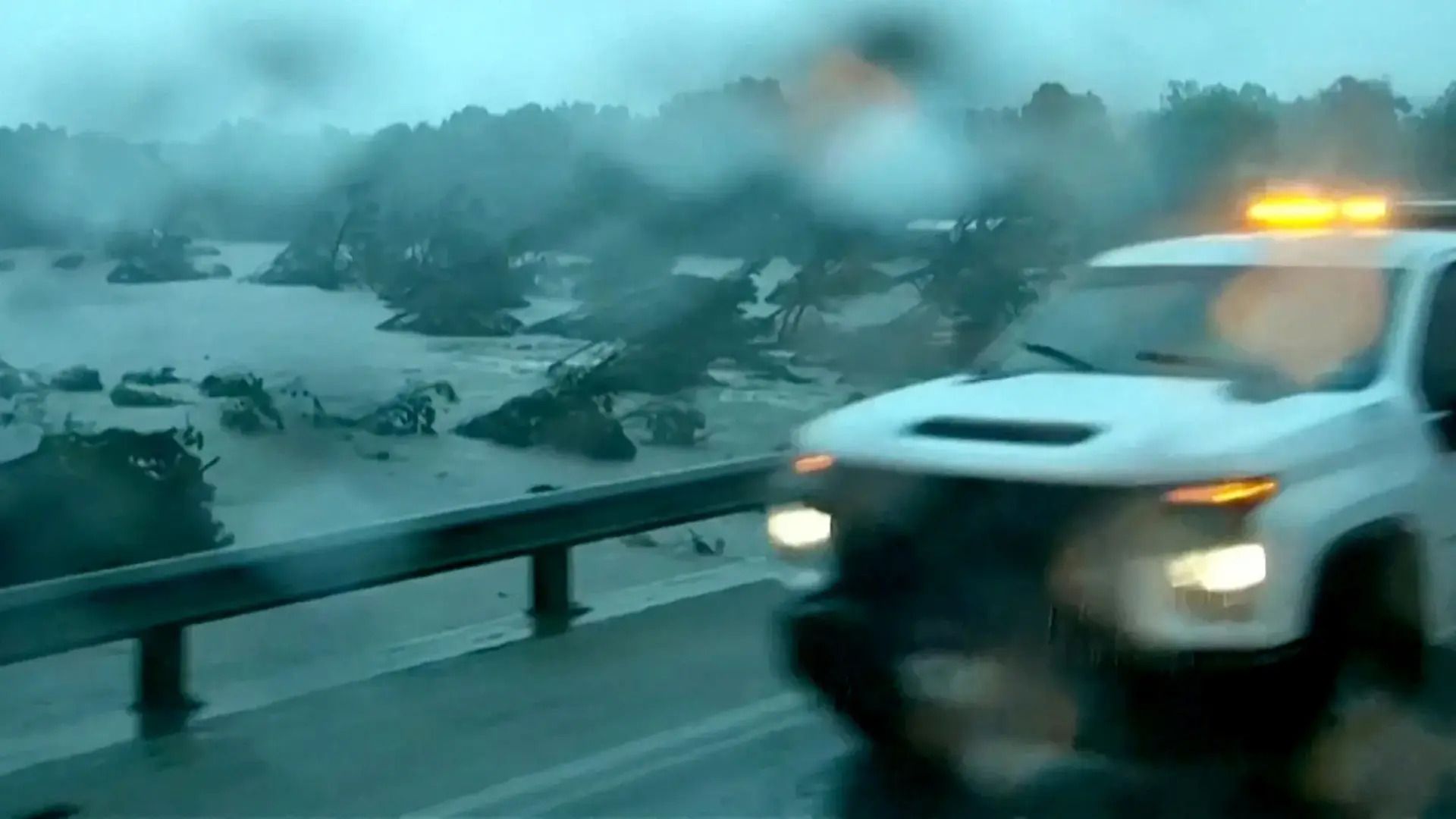
On the evening of July 3rd, as the sun went down over Kerrville, Texas, a small city of some twenty-five thousand people and the seat of Kerr County, the water in the Guadalupe River was just four inches deep, according to the U.S. Geological Survey’s stream gauge there. The area hadn’t had any rain since mid-June. R.V. campers in the HTR TX Hill Country campground in Kerrville, some of whom had arrived at the sixty-five-acre facility only hours before, could barely hear the river, even though they were parked in premium spots next to it.
At 3:30 A.M. on July 4th, Dalton Rice, the city manager, went out for an early-morning jog along the sluggish waterway. The river had risen to 1.71 feet, around the average depth. Kerrville’s much anticipated “Fourth on the River” celebration at the riverside Louise Hays Park was scheduled for that afternoon, and Rice saw “not a drop of rain” during his run, he later told Dan Patrick, the lieutenant governor of Texas. By 4 A.M., when Rice went home, “there was very light rain,” he said that day. “We did not see any signs of the river rising at that time.”
Rice was apparently unaware that a few hours earlier, at 1:14 A.M., the Austin-San Antonio office of the National Weather Service had sent a flash-flood warning for south-central Kerr County. The area it covered included the town of Hunt, about twelve miles upstream from Kerrville, where Camp Mystic, a girls’ sleepaway camp, was situated, at the confluence of Cypress Creek and the south fork of the Guadalupe. At 4:03 A.M., the warning was upgraded to an emergency: “This is a PARTICULARLY DANGEROUS SITUATION. SEEK HIGHER GROUND NOW!” The stream gauge at Hunt showed the river nearing twenty-two feet, twelve feet higher than its banks. In the next hour, it would rise to thirty-seven feet, at which point the gauge stopped transmitting.
🌏 The Culture Column
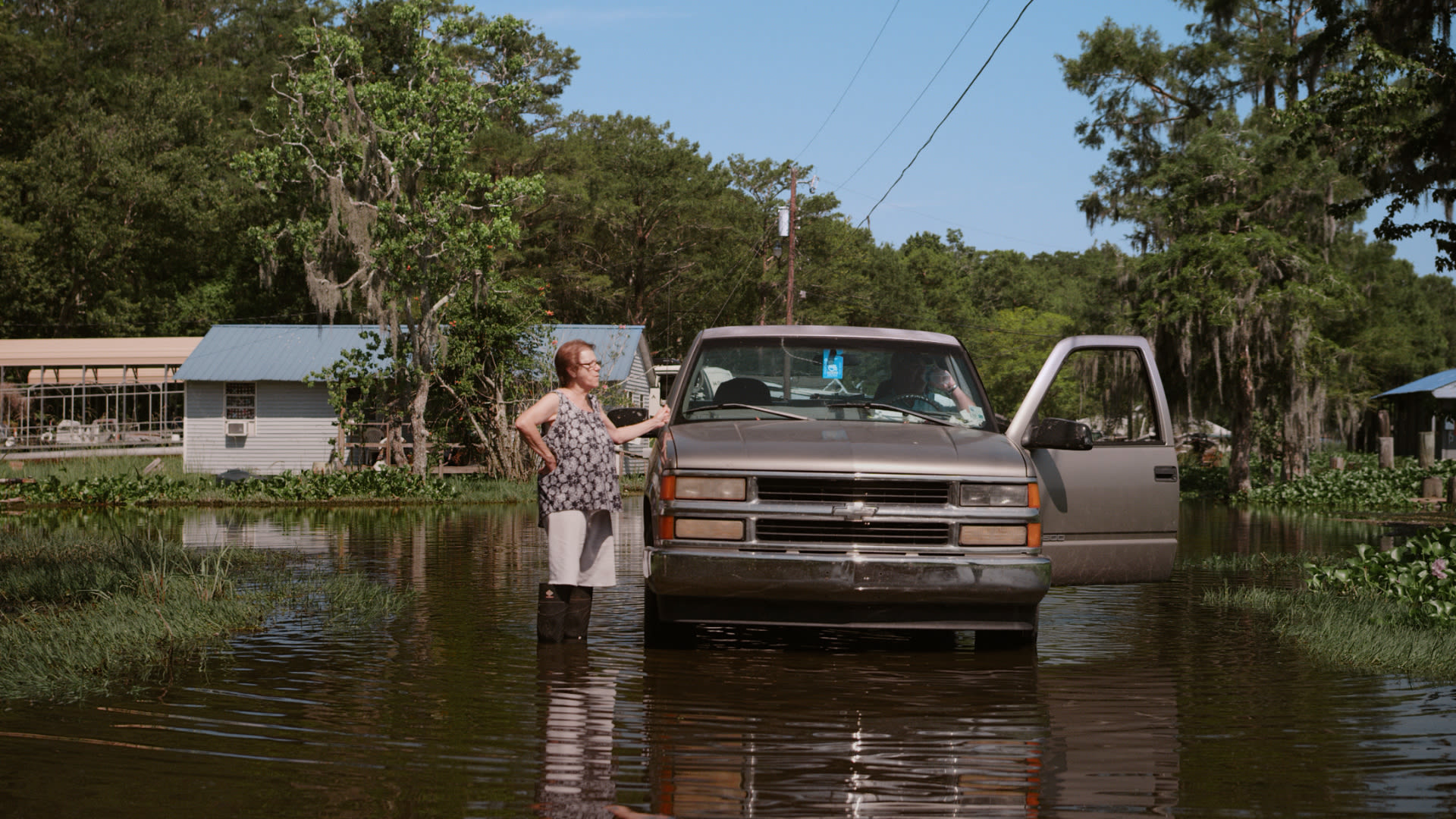
📺 What we’re watching: Belle River: The Resilience of a Sinking Town (New Yorker short documentary)
📸 Profile of the week: @climatevisuals
📖 What we’re reading: The Water Will Come: Rising Seas, Sinking Cities, and the Remaking of the Civilized World, by Jeff Goodell
🤯 Shocking fact we learnt this week: Jakarta is sinking by up to 15cm per year