- eco-nnect
- Posts
- On reforestation done right
On reforestation done right
while our houses could be part of the climate solution

Gaia Solaris
July 08, 2025
In partnership with

Dear well-meaning tree planters, let’s talk about what we’re really growing.
Trees are beautiful. They cool the air, hold soil in place, pull carbon from the atmosphere, and offer a simple, hopeful image, reaching toward a better future.
But not all tree planting is good.
Not all forests are forests.
And not every person planting trees is thinking about the planet.
As climate solutions go, tree planting is easy to sell. It looks good in a press release. It photographs well for social media. It lets corporations offset their emissions with glossy certificates and a nice green number. It makes governments feel productive without changing policy.
But beneath the surface, something troubling could be taking root.
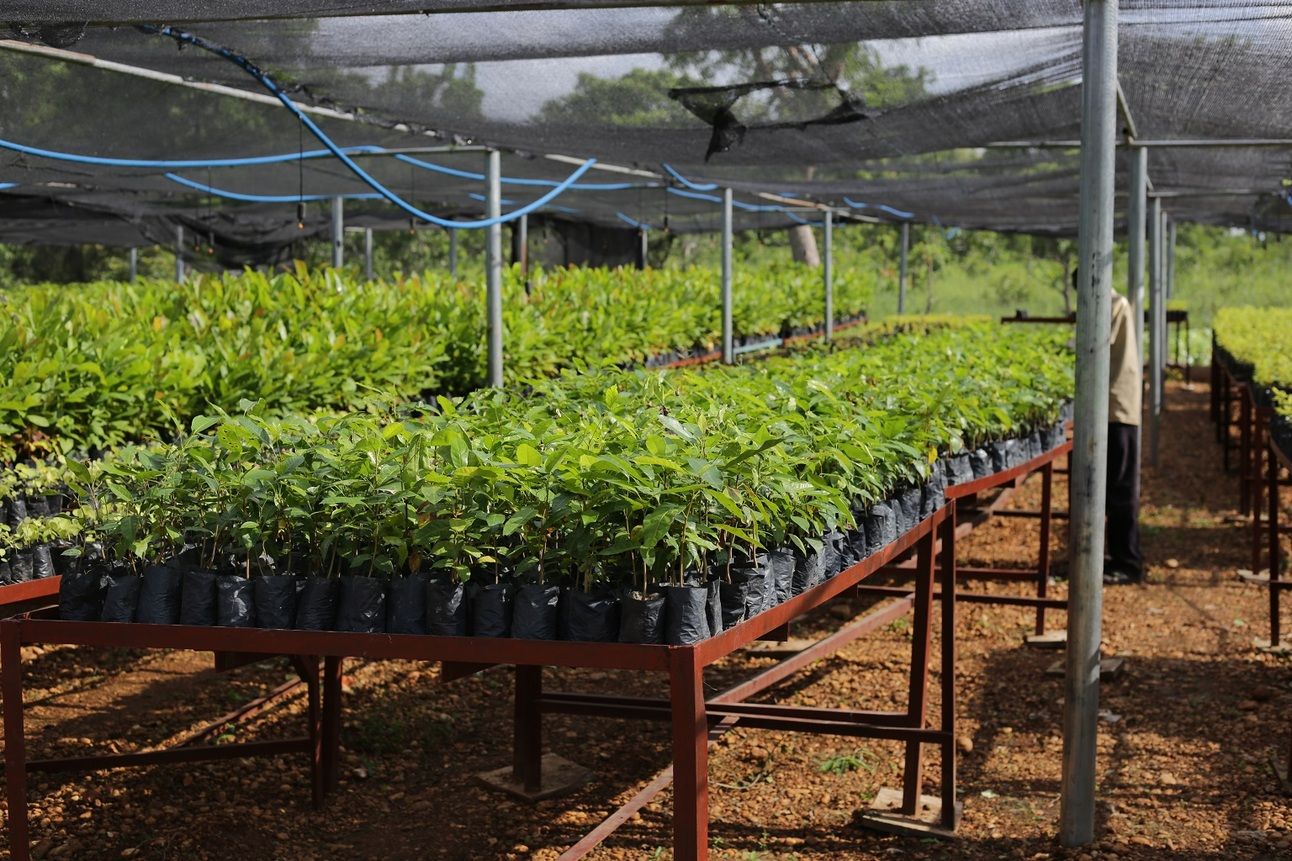
Across the world, corporations and carbon traders are using tree planting as a shortcut, and often, what they’re planting aren’t native forests. They’re industrial monocultures: rows of eucalyptus, pine, or acacia that grow fast, get logged fast, and leave ecosystems devastated.
They call it reforestation, but it’s just another form of extraction.
In parts of South America, Africa, and Southeast Asia, “climate-positive” tree plantations have replaced rich savannas, grasslands, and Indigenous territories. In some cases, people have been evicted to make room for these carbon farms. And the carbon benefits? Often overstated, sometimes fabricated.
A tree isn’t a climate solution if it’s planted on stolen land.
A tree isn’t justice if it replaces a thriving savanna with a pine desert.
A tree isn’t progress if its only purpose is to greenwash pollution.
So, plant trees. We need them desperately.
But do it for the right reasons, in the right places and with the right people.
Support community-led rewilding. Fund Indigenous land stewards. Protect what’s already standing before planting something new.
Reforestation without justice is just another way to colonize the future.
Let’s be the generation that knows the difference.
🗞️ In Climate News
🧊 Melting glaciers and ice caps could unleash wave of volcanic eruptions, study says
The loss of ice releases the pressure on underground magma chambers and makes eruptions more likely. This process has been seen in Iceland, an unusual island that sits on a mid-ocean tectonic plate boundary. But the research in Chile is one of the first studies to show a surge in volcanism on a continent in the past, after the last ice age ended.
🇺🇸 Texas flash floods: more rain forecast as death toll passes 100
The death toll from the flash floods that have wreaked devastation in Texas since Friday has passed 100 and is expected to rise further as more victims are found and more rain threatens to deluge the region.
Camp Mystic, the girls summer camp on the banks of the Guadalupe River in Texas, has confirmed that 27 children and counsellors died.
🇦🇺 South Australia ‘helpless’ in face of deadly marine algal bloom spreading to Adelaide beaches
Until recently, city beaches had escaped the worst of the deadly bloom of Karenia mikimotoi algae, which had devastated marine life from the Fleurieu peninsula, the Kangaroo Island, the Yorke peninsula and the Ramsar-listed Coorong amid warmer-than-normal sea temperatures.
🇬🇷 Wildfires are tearing through a popular tourist hotspot in Greece, forcing mass evacuations
More than 200 firefighters are struggling to tackle an out-of-control wildfire on Crete — Greece’s largest island and a tourist hotspot — as authorities order mass evacuations.
The fire broke out Wednesday afternoon near Ierapetra, a town on the island’s southeast coast, amid unusually high temperatures, 3 to 5 degrees Celsius (5.4 to 9 Fahrenheit) above average, and gale-force winds of around 50 miles an hour.
🇺🇸 Congressionally mandated climate reports disappeared from their federal websites
Legally mandated national climate assessments disappeared this week from the federal websites built to display them, making it harder for state and local governments and the public to learn what to expect in their backyards from a warming world.
🛜 Google just bought 200 megawatts of fusion energy that doesn’t even exist yet
Google and Massachusetts-based Commonwealth Fusion Systems announced a deal Monday in which the tech company bought 200 megawatts of power from Commonwealth’s first commercial fusion plant, the same amount of energy that could power roughly 200,000 average American homes.
🌵 Recent droughts are 'slow-moving global catastrophe' - UN report
From Somalia to mainland Europe, the past two years have seen some of the most ravaging droughts in recorded history, made worse by climate change, according to a UN-backed report.
Describing drought as a "silent killer" which "creeps in, drains resources, and devastates lives in slow motion" the report said it had exacerbated issues like poverty and ecosystem collapse.
🇮🇳 India's Kerala state seeks $1.1 billion in compensation from MSC over oil spill
The high court in Kerala issued an order late on Monday asking port authorities to effect "the arrest, seizure and detention" of another MSC ship anchored in the Vizhinjam Port in the state until it deposits securities for the claim amount.
🌍 From flood to famine: Rainfall chaos fuels Africa’s drought crisis
Climate change is intensifying water scarcity across Africa while also exacerbating droughts. Despite a brief uptick in rainfall across the continent, critical water shortages persist, particularly in major river basins such as the Zambezi.
📈 Cool Trends
Finally, a powerful CRM—made simple.

Attio is the AI-native CRM built to scale your company from seed stage to category leader. Powerful, flexible, and intuitive to use, Attio is the CRM for the next-generation of teams.
Sync your email and calendar, and Attio instantly builds your CRM—enriching every company, contact, and interaction with actionable insights in seconds.
With Attio, AI isn’t just a feature—it’s the foundation.
Instantly find and route leads with research agents
Get real-time AI insights during customer conversations
Build AI automations for your most complex workflows
Join fast growing teams like Flatfile, Replicate, Modal, and more.
♾️ eco-story
At an empty outpost deep in a forest in Mexico, biologists were checking whether the windows had been broken or the furniture stolen, or if any animals had made a home inside.
The outpost had been built in 2015 for a tree-planting and forest restoration project, but it was paused in 2023. The land had been degraded by decades of farming; massive flooding every few years made restoration work too difficult and expensive for Plant-for-the-Planet, the organization that had purchased it.
Researchers with Plant-for-the-Planet know they’ve fallen victim to overambition before, attempting to restore complex ecosystems they didn’t fully understand, and often with a very tight budget. At this idle site, they still hoped to get some support through a government wildlife program. But until that happened, the outpost would remain empty.
“For it to make sense to restore a forest, we really need to be thinking in terms of decades and centuries,” Anna Gee, the group’s forest restoration and conservation project manager, told Mongabay. “How do you create a forest that’s going to be able to sustain itself and self-perpetuate into the future and isn’t just going to get cut down again in 20 years?”
🌏 The Culture Column
📺 What we’re watching: Our Planet | Forests
📸 Profile of the week: @plantfortheplanet_official
📖 What we’re reading: Earth, by Iain S. Stewart, John Lynch