- eco-nnect
- Posts
- 🌡️On warm winters and dangerous social media trends
🌡️On warm winters and dangerous social media trends
while Kenya is recovering Nairobi's ecosystems

Gaia Solaris
March 28, 2025
Dear 1/5,
According to the latest reports, 1 in 5 Europeans has experienced the climate crisis every single day during last winter. That’s heatwaves, floods swallowing homes, and wildfires turning forests to ash, not in some distant future, but right now.
And yet, governments and corporations continue to expand fossil fuel projects, prioritising profit over people. How much more devastation will it take for real action?
Communities across Europe are already adapting, coming together to build resilience and demand change. From farmers restoring drought-stricken land to activists pushing for ambitious climate policies, people are fighting back. But they cannot do it alone.
It’s time to choose a future where people and nature thrive together. Because 1 in 5 is already too many.
🗞️ In Climate News
🇳🇱 Netherlands’ largest forest biomass plant canceled
Dutch forest campaigners are claiming a significant victory over one of the Netherlands’ top energy providers, Vattenfall, after the company decided in late February to cancel plans to build the nation’s largest wood pellet burning plant for energy.
🇵🇦 Panama conducts large illegal fishing bust in protected Pacific waters
Authorities seized six longliner vessels on Jan. 20 for fishing illegally in protected waters. They also opened an investigation into an additional 10 vessels that surveillance data showed had apparently been fishing in the area but left by the time authorities arrived.
🇲🇲 Powerful Myanmar earthquake kills dozens, also hits Thailand
The quake also hit Thailand and an official said that at least nine people had died in the capital Bangkok. Rescuers were searching through the rubble of a tower block that was under construction and collapsed in the quake.
🇰🇷 South Korea contains main blazes in week-old wildfires
It’s the country's largest forest fire on record, a minister said on Friday, as rain and better weather allowed more helicopters to fly and dump water, dousing the flames.
Spread by strong winds in bone-dry conditions, the wildfires have killed at least 28 people and charred more than 45,000 hectares (111,000 acres) in the southeastern region.
❄️ Arctic winter ends with lowest sea ice cover in recorded history
The Arctic reaches its maximum sea ice in March each year and then starts a six-month melt season. The National Snow and Ice Data Center said the peak measurement taken Saturday was 14.33 million square kilometres - about 80,000 square kilometres smaller than the lowest previous peak in 2017.
🇪🇺 Almost every European country experienced a hotter winter than usual
In recent months, attribution studies have found that it doubled the likelihood of Central Europe’s deadly floods in September, and made the hot, dry weather that drove January’s LA wildfires 35 per cent more likely. The heatwave that left students fainting in South Sudan last month was ten times more likely to occur in our era of fossil fuel burning.
💧 Earth’s storage of water in soil, lakes and rivers is dwindling. And it’s especially bad for farming
Their paper, published Thursday in the journal Science, finds that global warming has notably reduced the amount of water that’s being stored around the world in soil, lakes, rivers, snow and other places, with potentially irreversible impacts on agriculture and sea level rise.
🇦🇺 Vast areas of Australia’s Queensland under water after ‘unprecedented’ flooding
Communities across the Australian state of Queensland are bracing for more rain after record-breaking floods cut off roads and inundated vast areas of the region’s outback.
🇪🇸 A parched Spain has emerged from drought only to face floods
Drought relief came at a price, as flash floods forced hundreds of people to evacuate their homes, closed schools and highways and swept cars away. While it can be difficult to identify climate change as the cause of a single event, scientists say it is making such swings between dryness and downpour ever more extreme.
📈 Cool Trends
♾️ eco-story
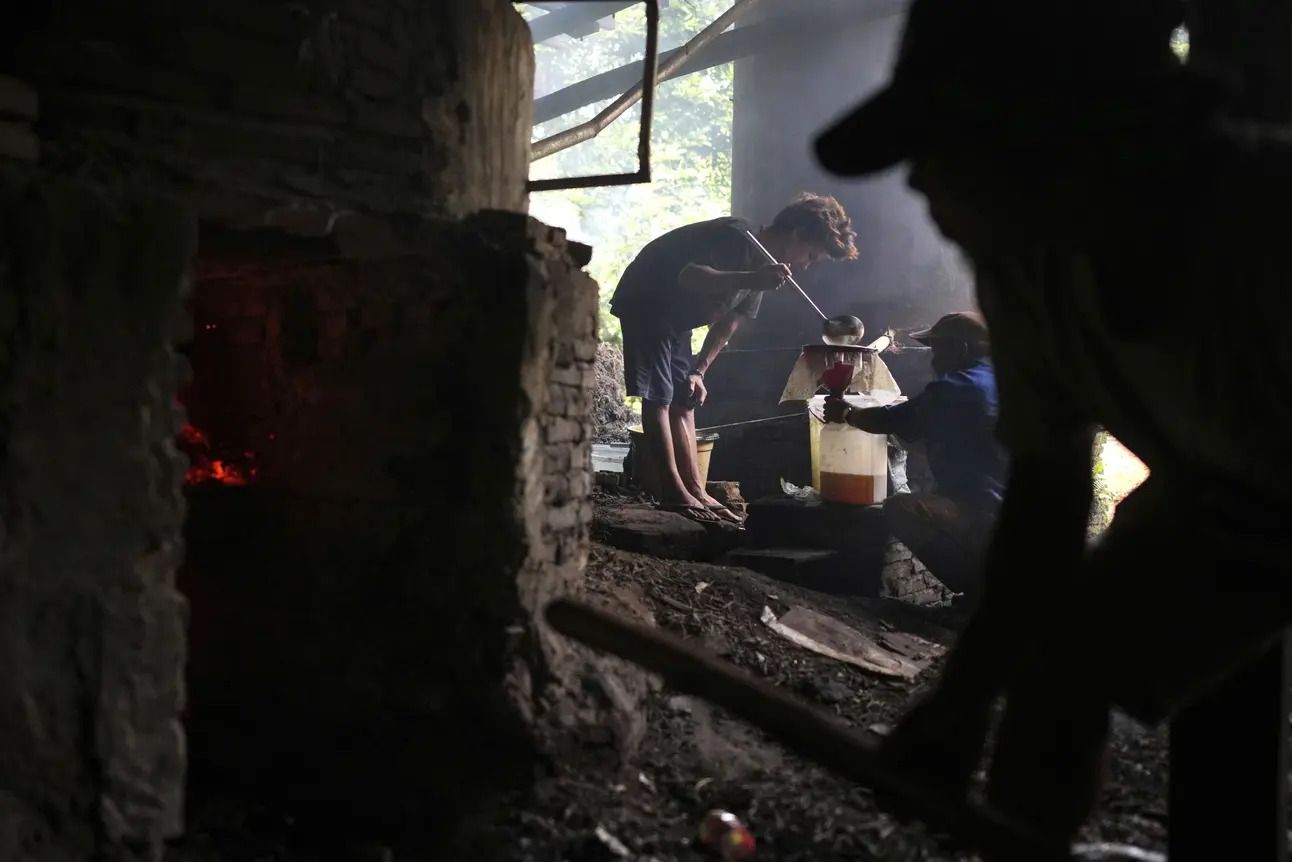
Tucked between the village and the forest, Haruna and his father-in-law worked diligently through the night distilling dried patchouli plants, stoking the boiler with firewood, drops of fragrant patchouli oil trickling into plastic bottles.
A sense of satisfaction washed over them as they watched the container fill with thick, rich brown oil, a sign of high-quality patchouli, the result of their hard work and precision.
Haruna, 42, who like many Indonesians only uses one name, is a patchouli farmer in Simboro, a sub-district of western Sulawesi. He and his father-in-law have been waiting in line for several weeks to finally be able to process their harvest in a modest steam distillation facility an hour’s drive from their farm. Demand for the plant’s oils has skyrocketed in recent years, and so too has the number of farmers in the region who grow and process it. But the trend has an uglier underbelly as Indonesia’s vast rainforest is cleared to make way for patchouli farming. That loss of a vital ecosystem also increases the threat of landslides.
🌏 The Culture Column
📸 Profile of the week: @kynantegar
📖 What we’re reading: The Jungle School, by Butet Manurung
🤯 Shocking fact we learnt this week: As of 2023, global demand for patchouli oil is over 1,600 metric tons (1,600 long tons; 1,800 short tons) per year, of which over 90% is produced by Indonesia.