- eco-nnect
- Posts
- 🌊On World Ocean Day and the dangers of being a conservationist in Africa
🌊On World Ocean Day and the dangers of being a conservationist in Africa
while the ocean keeps getting warmer

Gaia Solaris
June 08, 2025
Sponsored by

Dear ocean defenders,
Today marks World Ocean Day, and we’re arriving at the UN Ocean Conference (UNOC) at a time when global attention on ocean health is more critical than ever. But while oceans are the focus today, the climate crisis demands that we connect the dots across systems, from rising seas to vanishing glaciers, extreme weather, and extractive industries.
The climate crisis is not one story, but many unfolding at once: rising seas, shrinking water supplies, disappearing biodiversity, extreme weather, and growing social and economic pressure. This week’s headlines reflect that complexity. From cities on the brink of water collapse to new funding for ocean protection, from deep-sea biodiversity loss to high-tech solutions, the picture is global, urgent, and deeply interconnected. Even the remote and pristine Rowley Shoals in Western Australia are now suffering from the region’s worst coral bleaching event on record.
As always, our goal is to surface the links that matter, between people, planet, and policy, and to center the communities and ecosystems that are too often left out of decision-making.
Let’s get into the stories that matter.
🗞️ In Climate News
🇦🇫 Kabul at risk of becoming first modern city to run out of water, report warns
Water levels within Kabul’s aquifers have dropped by up to 30 metres over the past decade owing to rapid urbanisation and climate breakdown, according to a report by the NGO Mercy Corps.
🌡️ Marine heatwave found to have engulfed area of ocean five times the size of Australia
Almost 40 million sq kilometres of ocean around south-east Asia and the Pacific – an area five times the size of Australia – was engulfed in a marine heatwave in 2024, a World Meteorological Organization (WMO) report has revealed.
The Rowley Shoals are on many a diver’s bucket list. The three coral atolls, hundreds of kilometres off the Western Australian coastline, are teeming with pristine coral gardens that for a long time, unlike many of the world’s reefs, had escaped the ravages of global heating.
The campaign group said activists on the Rainbow Warrior this week observed a longline fishing operation by the Playa Zahara in the South Fiji Basin.
🇳🇬 Nigeria’s deadly flood exposes urgent need for climate adaptation plan
Ndagi woke up to screams on the morning of May 29 to see that the rain had flooded his entire neighbourhood. While his house was not directly affected, from a distance he could see people being swept away by the water. They were “calling for help but we couldn’t help them because it was risky”, he said.
❄️ Nearly 40% of the world’s glaciers are already doomed
Researchers estimate glaciers will eventually lose 39% of their mass relative to 2020, a trend that is already irreversible no matter what comes next and will likely contribute a 113-millimeter increase to global sea level rise.
🤖 Tech giants' indirect emissions rose 150% in three years as AI expands, UN agency says
Indirect carbon emissions from the operations of four of the leading AI-focused tech companies rose on average by 150% from 2020-2023, due to the demands of power-hungry data centres, a United Nations report, opens new tab said on Thursday.
🌎 Latam-Caribbean development bank doubles oceans funding to $2.5 billion
The Development Bank of Latin America and the Caribbean (CAF) will double to $2.5 billion its investments in protecting the oceans and supporting sustainable marine economic activities, it said on Saturday.
The bank has already exceeded its existing oceans funding commitment, of $1.25 billion over 2022-2026, with investments including strengthening marine protected areas and supporting small-scale fisheries.
🇬🇹 Guatemala's Fuego volcano eruption cools after over 700 evacuated
A Liberian-flagged cargo ship, MSC ELSA 3, carrying roughly 640 declared containers, sank off the coast of Kerala state in southern India. Indian authorities rescued all 24 crew on board, but most of the containers remain untraced and their contents unknown, raising environmental concerns.
Looking for unbiased, fact-based news? Join 1440 today.

Join over 4 million Americans who start their day with 1440 – your daily digest for unbiased, fact-centric news. From politics to sports, we cover it all by analyzing over 100 sources. Our concise, 5-minute read lands in your inbox each morning at no cost. Experience news without the noise; let 1440 help you make up your own mind. Sign up now and invite your friends and family to be part of the informed.
📈 Cool Trends
♾️ eco-story
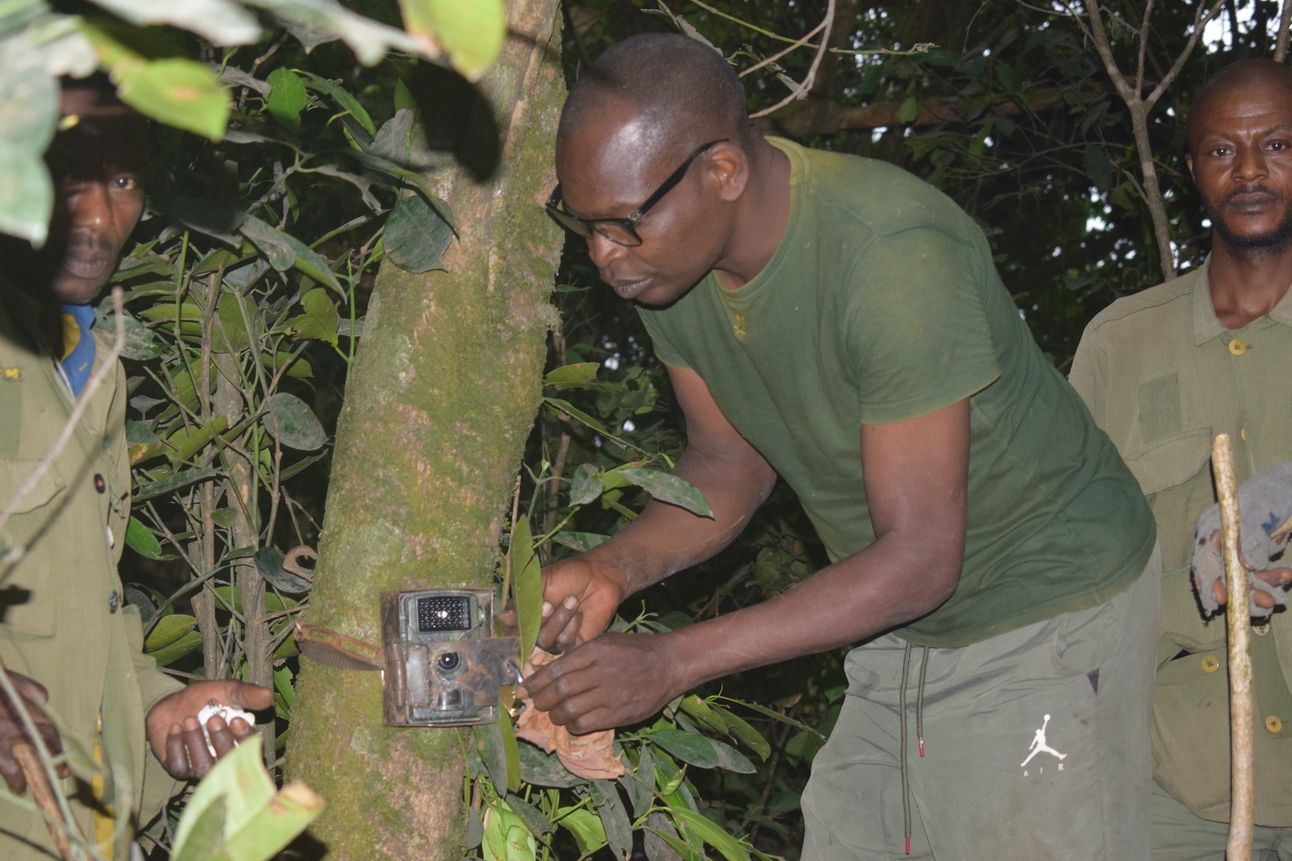
On the evening of May 9, 2019, conservationist and teacher Itakwu Innocent narrowly survived an assassination attempt outside his home in Kubong-Bette, a small farming village in the southeastern Nigerian state of Cross River.
“Daddy! Gun!” Innocent recalls his son screaming seconds before a shot was fired. The bullet scraped his temple, shredding his earlobe into a dangling piece of bleeding flesh.
“They thought I was dead,” Innocent says.
The attempt on Innocent’s life epitomizes the threats facing African scientists who come from, and work on, the frontlines of rural conservation.
Innocent’s intricate connection to the grassroots ecosystem gives him a deep understanding of the land and the people that surround him. Yet, this connection exposes him to attacks and threats that, unlike foreign or urban-based scientists, he lacks resources to confront or escape.
“One cannot run away from his home,“ he says. “This is my only home. And if I don’t save it, who will?”
🌏 The Culture Column
📺 What we’re watching: The Ivory Game
📸 Profile of the week: @wildlifedirect
📖 What we’re reading: The Uninhabitable Earth: Life After Warming, by David Wallace-Wells
🤯 Shocking fact we learnt this week: Women make up only 11% of leadership roles in African conservation NGOs, despite growing numbers of female scientists and field officers doing frontline work.